


Keep doomscrolling. Just do it in Chinese.

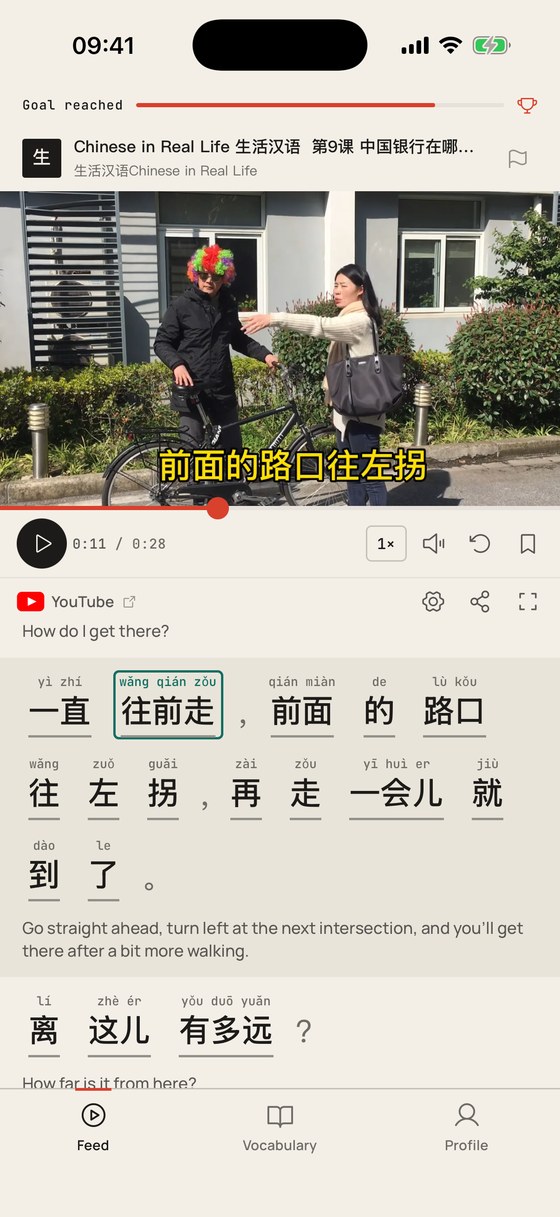
The same swipe, the same half hour before bed — on real clips by Chinese creators, with every sentence written under the video and one tap on any word you don't know.


  • Every sentence of the clip, under the video

  • Pinyin over each word, the spoken one boxed

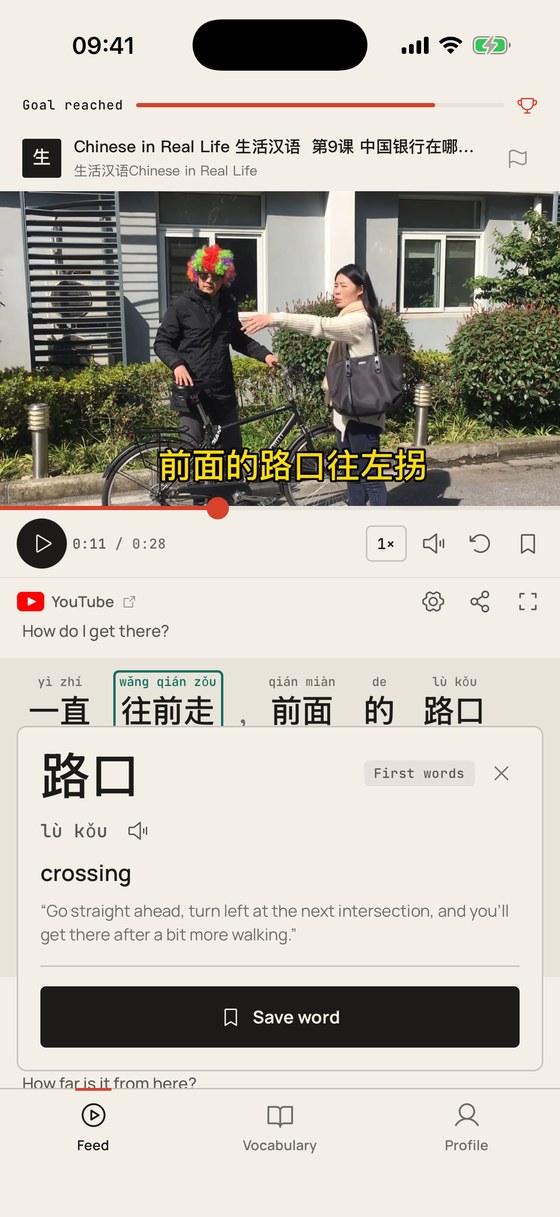
  • Tap a word for the meaning, tap again to keep it
Get lifetime access $19 $79.99 later. $19 today, once, for life.

68 of 100 seats taken · 32 left at $19

  • The app is not out yet. What you buy is lifetime access to it. It arrives in the App Store on September 14, iPhone first; Android two weeks later, at the end of September.
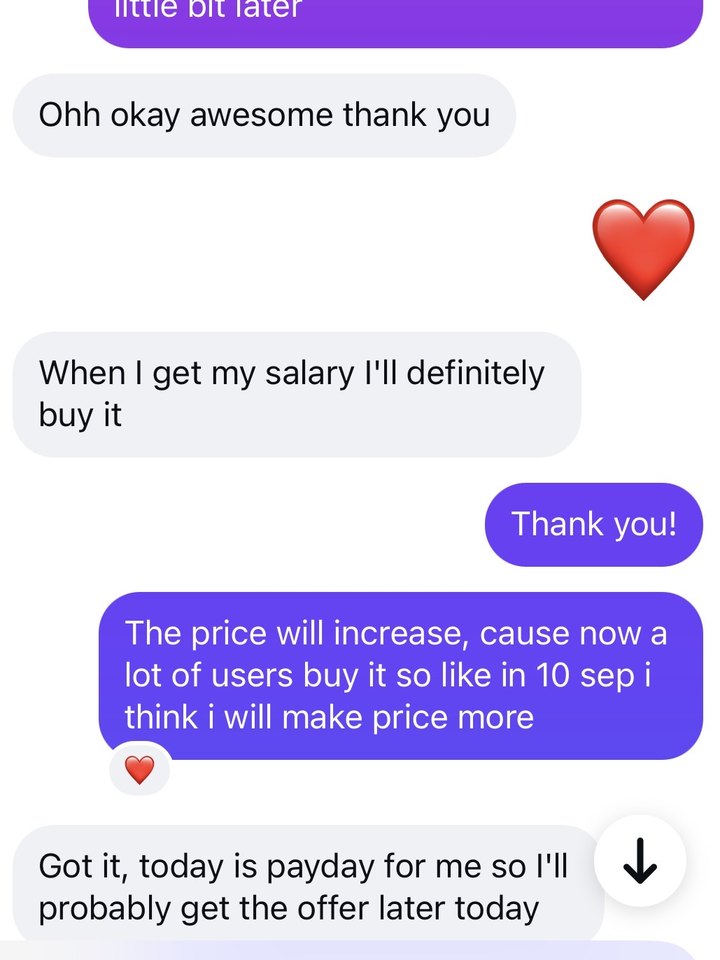
  • $19 once, not a subscription. Everyone who arrives after launch pays $79.99 in the app.
  • Yours for good. Every update after — new clips, new features, the Android build. Refund on request.

This is the real thing, running here. Swipe for the next clip, tap any word.


Same thought. Only one of them gets said out loud.

The Chinese you will actually hear is not in your textbook. Every sentence a course teaches is correct, and almost nobody speaks that way. Lilu starts from the other end: real speech at real speed, inside the habit you already keep every night.

In the lesson
xiǎng kāfēi咖啡

I would like to drink coffee.

In a real conversation
yǒudiǎn有点 xiǎng kāfēi咖啡 le

Kind of feel like a coffee now.

Early access. One hundred people.

$19 once, for life

68 of 100 seats taken · 32 left at $19

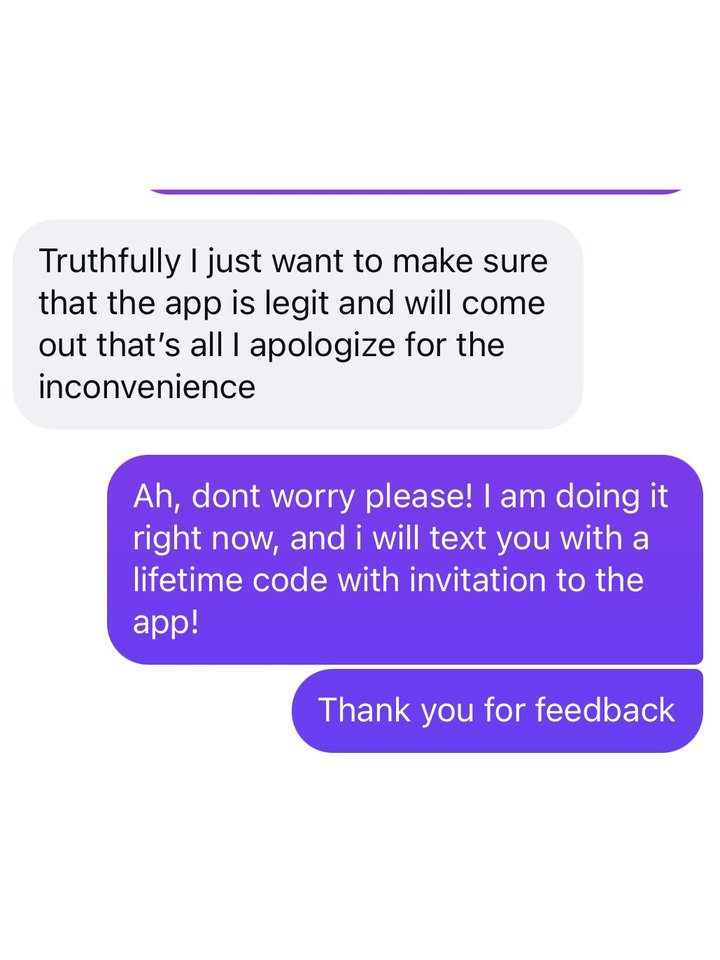
You are buying an app that does not exist yet, from one person. So the deal is deliberately simple.

If it is not what you hoped for, write to me and I will send the money back. No form, no window, no questions. That is the whole refund policy.

Get lifetime access $19

On September 14 the App Store link comes to the email you pay with.

  • The first version, first. As soon as the build is worth testing, before it is public.
  • A say in what comes next. I read every message, and the roadmap moves when early buyers push it.
  • This price forever. When it becomes $79.99 in the app, you are already inside, including everything added later.
Not ready to buy? Get launch updates

One email. Nothing else, ever.

Card refused? Write to me and we will find another way.


What one clip gives you.

All of it is in the demo above, working.

yèshì夜市

The whole transcript, not two lines of subtitle

Every sentence of the clip, with its translation, under the video.

xiǎng

The word that is playing is boxed

A green box follows the audio word by word. Too fast — drop to 0.6x.

shénme什么

Pinyin over every word

Over the word it belongs to, not in one line below. Turn it off when you outgrow it.

le

Tap a word, get the meaning

What it means here, how it sounds, how hard it is. One more tap keeps it.

yángròu羊肉

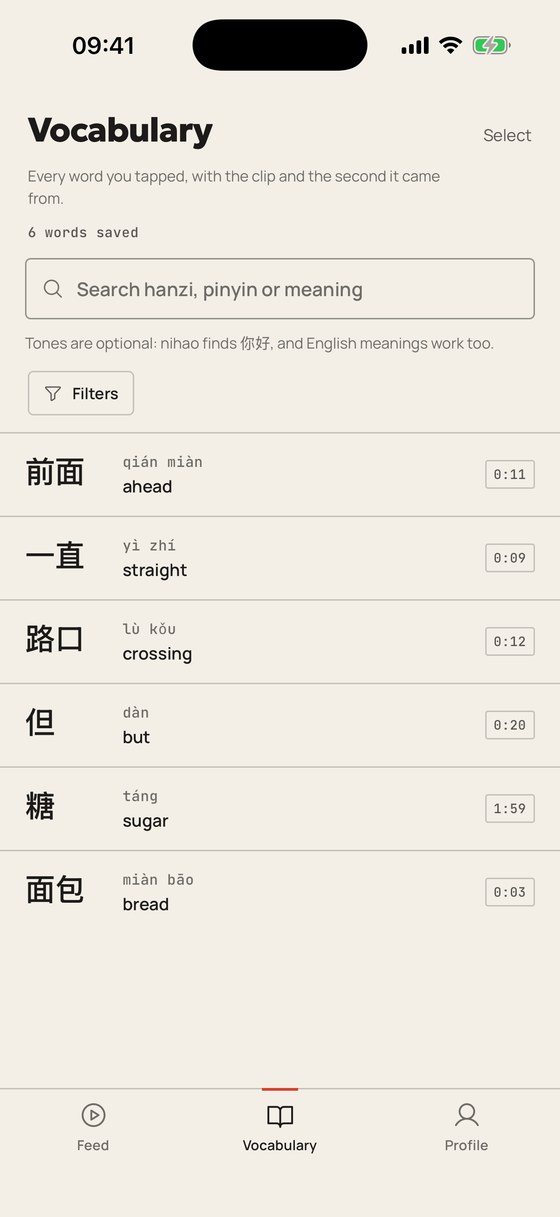
Your vocabulary is what you met

The words you ran into, with the sentence you met them in.

duōshao多少

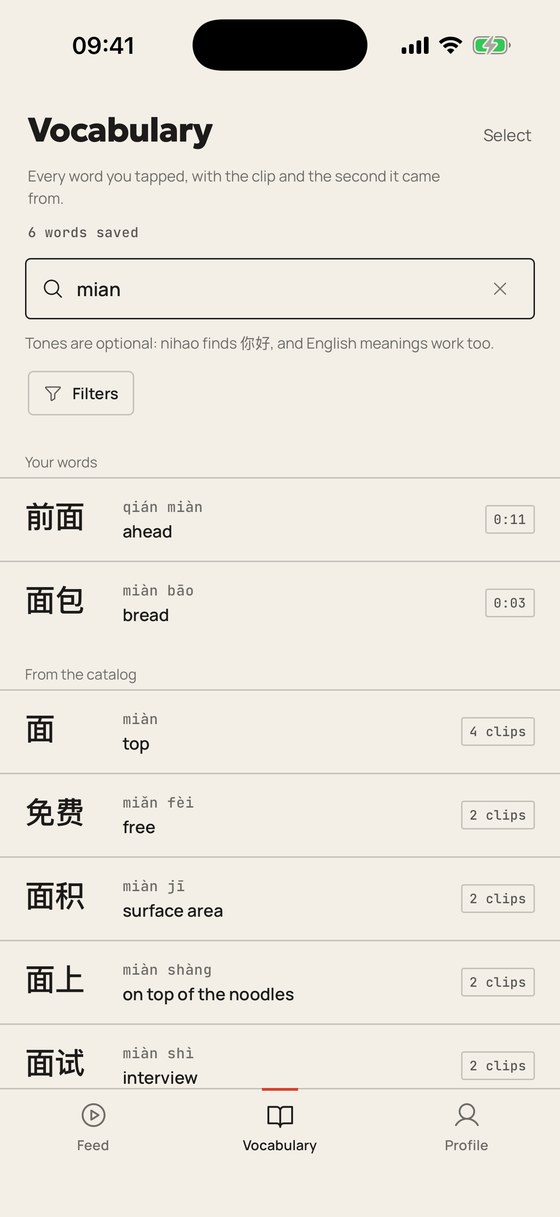
Hear a word in five other clips

Search a word, hear it in every other clip. Four mouths make it stick.


Where the videos come from.

Real clips by Chinese creators, played through the official YouTube player. Nothing is hosted, downloaded or re-uploaded: every clip carries the creator's name and a link, and the views count for them.

What you pay for is what is built on top: the transcript, the pinyin, the word cards, your vocabulary, the search. Never the video itself.

The creators are from the mainland, so the feed is Mandarin in simplified characters — 学, not 學. That is what is written on the screen, in the transcript and on every word card. Traditional characters are not in the first version.


Why I am building this.

31 seconds, in my own voice. Sound on.

I am Ilya. I design websites for a living, I work alone, and I was learning Chinese with the same apps as everyone else.

Then I went to China. The apps had prepared me for a language nobody around me was speaking. Too fast, half swallowed, full of things no lesson had ever shown me. The problem was never effort — it was the material.

What moved me forward was watching what Chinese people watch, with some way to stop and ask what a word meant. For Chinese, that tool did not exist.

So I am building it. No team, no investors, which is exactly why I am asking a hundred people to pay for it early instead of waiting for someone to fund it.

Ilya, designer and the whole team

Why not just a course app — or free Chinese TikTok?

Duolingo, HelloChinese, a textbook are good at what they are good at: characters, tones, the first thousand words. Lilu is the part they leave out.

And free doomscrolling in Chinese already exists — it is half an hour of understanding nothing. Same clips, same swipe. What is missing is the line under the video and the tap that keeps a word.

A course
Lilu
Sentences written to fit a lesson.
Sentences said to a camera by someone who is not teaching you anything.
Studio audio, recorded slowly and clearly.
Street noise, accents, people talking over each other. The real difficulty, from day one.
A fixed list of words in a fixed order.
The words you actually ran into, saved in the sentence you met them in.
You finish the course and freeze in a real conversation.
Your first hour is already spent on speech at full speed, with a safety net.

Read this far? The same app costs $79.99 in the store after launch. Right now it is $19, one payment, yours for life — 32 of the hundred seats are still open.

Get lifetime access $19

What works today, what comes next.

Written down so you can hold me to it.

Working now

The demo at the top of this page

Everything the demo does: feed, transcript with the karaoke box, pinyin, word cards, your vocabulary, search, 0.6x speed. In a browser, on eight clips.

September 14 · first release

The iPhone app

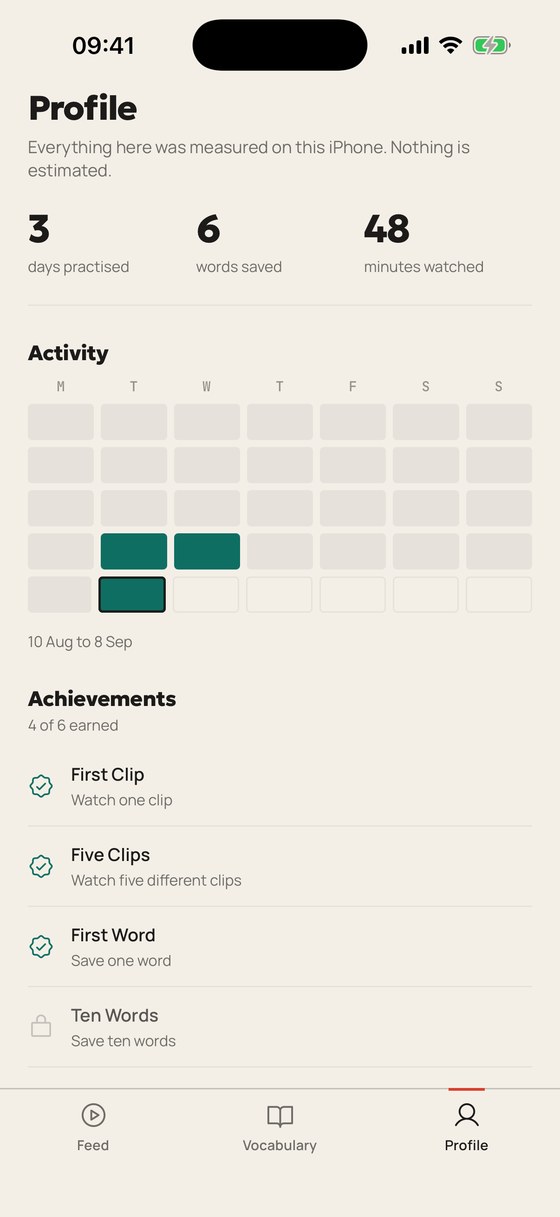
A real clip library instead of eight, with the same transcription running across all of it, saved words that survive a restart, and the daily goal that actually tracks you.

End of September · Android

Android, then spaced repetition and offline

The Android version two weeks after the iPhone one. After that: words you saved coming back at the right moment, and clips that keep working on a plane. Order decided with the people who bought early.


Questions.

Anything not answered here, write to me before you pay. I would rather answer than refund.

When does it come out?

On September 14. The app goes into the App Store that day, and everyone who bought early gets an email with the link to download it.

iPhone or Android?

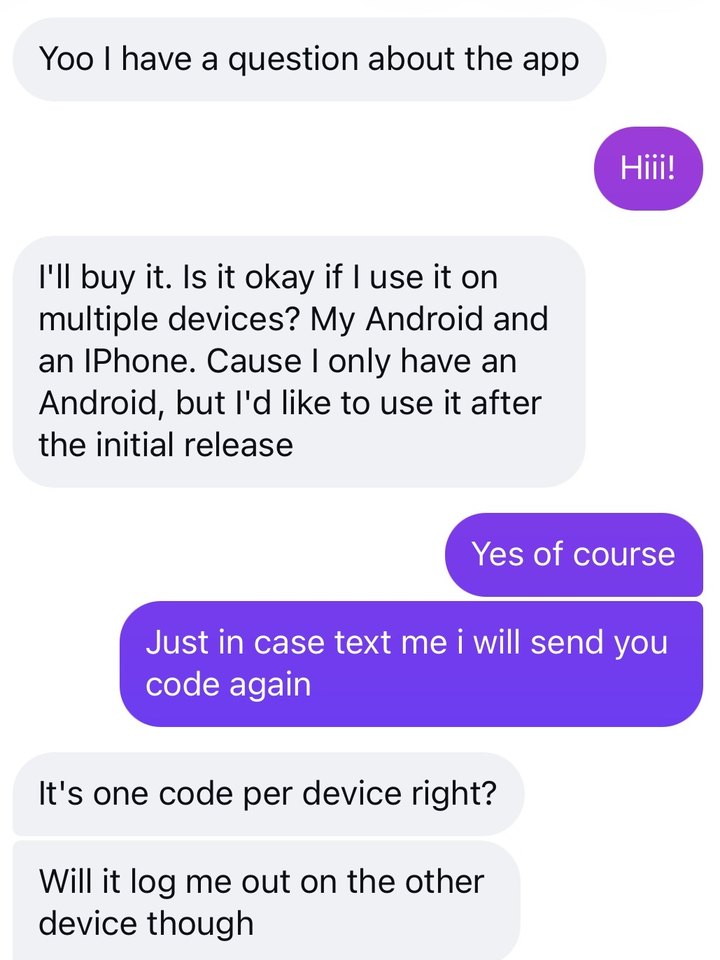
iPhone first — on September 14 it is in the App Store and you download it like any other app. Android follows two weeks later, at the end of September. Buying now covers both: you are paying for the app, not for one kind of phone.

What if you miss September 14?

It can happen, and you deserve to hear it plainly rather than discover it. If a date moves I write to everyone with what is actually going on. If you would rather not wait, ask for your money back and you get it, no argument.

Is this just doomscrolling?

Yes, and that is the whole idea. The habit is already there — half an hour of vertical video most evenings. Lilu does not ask you to swap it for a lesson; it puts the transcript, the pinyin and the word cards inside the same scroll. Nobody keeps a study streak for a year. Everybody keeps scrolling.

Simplified or traditional characters?

Simplified — 学, not 學. The creators in the feed are from the mainland, so that is what is spoken and what is written in every transcript and word card. Traditional characters (Taiwan, Hong Kong) are not in the first version. If that is what you need, write to me before you pay: I would rather answer than take $19 for the wrong writing system.

Where do the videos come from?

Real clips by Chinese creators, played through the official YouTube player, with the author credited and linked on every clip. Nothing is downloaded, re-hosted or re-uploaded, and the app never sells access to the video: it sells the transcript, the word cards and the vocabulary built around it.

Do I need to know some Chinese already?

No. Zero is a fine starting point: pinyin sits over every word, every sentence has a translation, and nothing is locked. The more characters you know the faster it goes, but the app is built so that the first clip is watchable on day one.

How is this different from the Japanese scroll apps?

Same instinct, different centre of gravity. Those apps put one or two subtitle lines under the clip. Lilu puts the entire transcript there, word by word, with a box that follows the audio, and lets you search a word across every clip you have watched to hear it in other mouths. And it is built for Chinese, where tones and characters make reading along a different job than in Japanese.

Is this a subscription?

No. $19 once, for the app and everything added to it. Everyone who arrives after launch pays $79.99 in the app for the same thing.

How do I get access after paying?

Paying leaves your email with me, and that is where I write: the App Store link on September 14, and short notes on what is being built until then. If the email never arrives, write to me and I will find your payment by hand. There are a hundred of you, not a hundred thousand.